Latest Posts

Eco-friendly Travel Must Haves

Happy Wanderlust Wednesday!

If you are getting ready for your next travel adventure, and you are looking for some great eco-friendly products then this post is just for you.  Curious to find out what’s in my bag? I have 6 easy to travel with eco-friendly travel must haves. They are a selection of basic items. Truth, I am almost always overpack! I am still learning how to pack lighter.  It is safe to say, I could add more items to my bag (and this post).

What’s in my bag? Eco-friendly Travel Must Haves

The Bag- A reusable Paris themed bag

A reusable bag is always a great investment. Plastic bags are a nightmare for the planet.  A reusable bag is wonderful to have when traveling, especially if you like to do some impromptu shopping at a local farmers market or great stores you find along the way.  I love my Paris themed bag, it is a perfect fit for traveling.

H2O on the go

What is lovely to see, is hydration stations in public venues and airports. Having a reusable water bottle with you at all times is great.  It keeps you from having to cave in and purchase bottled water. No matter where you are traveling staying hydrated is key.

Get the Eco Chic Look

Traveling can be a bit of a nightmare, and all the running around and waking up at crazy hours or flying in on a red-eye it’s hard for a girl to look her best.  Sometimes less is more, and all a girl ready needs is that perfect shade of lipstick.  Butter London has a wonderful array of makeup and products. Here is the best part, these products are carcinogen-free.  My favorite little makeup and cosmetics bag is from  Cheeky What is great about having a little cosmetics bag with you, is you can store makeup and other little odds and ends.  These lovely items I purchased from Le Visage at Camana Bay you can find a wonderful selection of makeup and skincare products that are great for you and the planet.

Beauty Rush with LUSH

I love the little travel size shampoo and conditioners hotels offer you.  The only downside is the plastic packaging. I just recently discovered that LUSH makes both a shampoo and conditioner bar! Hello, no plastic packaging!  On the plus side, hotels always offer you bar soaps with little or no plastic packaging.

Wake Me Up For Champagne!


The general rule is if you are gonna wake someone up who is sleeping on a plane, can it at least be for champagne? A sleeping mask is the best thing ever, especially when traveling. What I find great about this particular one is the velcro strap. Other styles often end up loosing their shape and becoming loose resulting in the purchase of a new one, this particular style is adjustable so lasts longer (if not, forever).

Tell us where your next travel adventure is and what are your favorite eco-friendly travel must haves…

Happy and safe travels, xo


Birthday Wishes, Give With Love, xo

On 13th October 2013, I started a birthday tradition, whereby I selected a group of charities to raise awareness and funds for.  I asked friends and family to kindly make a donation in lieu of gifts.  In my twenties, I had reached a point in my life where I no longer needed to accumulate more things.  I love presents just as much as anyone, but the truth was I didn’t need them.  I would rather friends and family give what they would have spent on a birthday present to a charity instead.  So, with that in mind, I used my blog as a platform to help raise awareness for the selected charities over the years.  This year, the theme is blue.  It is the commonality between all three charities I would like to highlight this year.  Blue is representative of the ocean, which directly correlates to both Force Blue and Grand Cayman Eco Divers: Coral Nursery Conservation Program.  Having spent nearly my entire life living on an island, I am drawn to the ocean.  I love everything about the ocean.  It is my sanctuary.  As far as I am concerned, the ocean is the most enchanting place on the planet.  The health of our oceans, coral reefs and marine life rely on the protection and ocean conservation globally to keep it thriving.  Our oceans are the heart of this planet.  Blue also happens to be the awareness color for diabetes, a cause very close to my heart.  The blue circle is the global symbol for diabetes awareness as designated by the United Nations, it is symbolic of the blue sky we are all under and unity.

My birthday wish this year is simply to raise awareness and funds for these causes.  All I ask, is for friends and family and wonderful people I have not met, but are reading this post to kindly share this post to raise awareness for these great causes and/or if you can make a donation.  Usually, I would write this post on my birthday, however, I thought if I release it earlier it might help raise more awareness and hopefully funds for these causes. Feel free to us this hashtag when sharing the post  #ecochicbirthdaywishes

Give With Love, xo

Below are three organizations I would like to raise awareness and funds for.  Each of them, I have worked with in some capacity.  They are all very worthy causes and close to my heart.  I have absolute respect for their initiatives to help make a difference in the world and the lives of others.  It has been an honor to get to know the people who work at these organizations and work alongside them.

FORCE BLUE

FORCE BLUE is a non-profit organization, (501(c)(3) initiative based in New York, their mission is to unite the community of Special Operations veterans with the world of coral reef conservation for the betterment of both. FORCE BLUE gives former combat divers and SOF veterans the chance to experience and explore one of the most critically endangered ecosystems on the planet and to adapt their training and teamwork to aid in its protection (FORCE BLUE).  It is an incredible honor to have met the veterans of Force Blue’s Team One.  After getting to know them, hear their story and work with FORCE BLUE it has changed a part of me forever.  The veterans of FORCE BLUE Team One have such incredibly beautiful souls.  They are my heroes.  They are humble, inspiring and have a great respect and passion for ocean conservation.  FORCE BLUE’s initiative is life changing.  FORCE BLUE Team One had their first mission here in the Cayman Islands and they helped with the Coral Nursery Conservation Program we have on island, to read more click here 

FORCE BLUE To make a donation please click here to their website  

Grand Cayman Eco Divers: Coral Nursery Conservation Program

Grand Cayman Eco Divers, is a husband and wife team devoted to supporting the reefs and are dedicated to maintaining the coral nurseries, outplanting, and educating the youth about coral.  Their Coral Nursery Conservation Program seeks to grow viable coral fragments on “coral trees” to later outplant them onto damaged or critical coral reef areas.  This effort of coral conservation has proven successful.  Funds from the public and corporations are needed to help keep this conservation effort going.

To make a donation click here to their website 

Cayman Islands Diabetes Association


Diabetes is a cause that is very dear to my heart.  At 21, I lost my mother to complications of diabetes.  My mother unfortunately had lost her eye sight, had a series of strokes, and finally had kidney failure, all of which are complications of diabetes.  My mother’s birthday was 31st October, as a way to honor her memory I would like to raise awareness for the Cayman Islands Diabetes Association.  The Cayman Islands Diabetes Association is a non-profit organization and they offer free public screenings for diabetes using the HbA1c test which gives a 3 month average reading of glucose levels.

To make a donation: Please email to inquire donation options and details cidiabetes@candw.ky

P.S.- Thank You, xo

Thank you to everyone who is able to make a contribution to help these wonderful organizations.  Whether it is by simply sharing this post to help raise awareness or making a donation.  Your generosity is greatly appreciated and will help these organizations in helping make a difference and carrying out their initiatives.

#ecochicbirthdaywishes

with love, Laura xoxo

Photo Credits:

FORCE BLUE

Grand Cayman Eco Divers

Jim Catlin

Turning the Tide on Plastic

It is becoming more evident that as consumers we have an addiction to plastic and it is a habit that is in desperate need of breaking. Plastic is an escalating problem globally. In particular, single-use plastics such as bottle caps, plastic bags, straws and so on are more frequently being found in our oceans or tangled around or ingested by marine life. Micro-plastics are another major component of ocean pollution. Plastic products that are not recycled end up somewhere and that could be in landfills or as debris polluting the environment, rivers, lakes, and oceans which is problematic. Somewhere along the way the ocean has become a trash can, and it was never intended or designed to be one. Our oceans serve as a home to marine life, coral reefs and ecosystems all of which depend on a healthy ocean for their survival— we depend on a healthy ocean for our survival. We view the ocean as this indestructible resource, however, even the ocean has its limits and plastic pollution disrupts the health of the ocean and is harmful to marine life. Some marine life become entangled in plastic and it often results in their death. While other marine life, ingest plastic which can also result in their death. That being said, the fish that we consume, is highly likely to have consumed plastic particles or micro-plastics and that could be problematic to our health in the future. As plastic pollution in our oceans is a growing issue and concern globally, it implores us to re-evaluate our consumption habits.  It is so easy to develop a disconnect once trash is tossed out or put in a landfill. We tend not to think about where it ends up, it quickly becomes out of sight and out of mind and from that it is easy to disregard the implications it might have on the place it ends up. The thing is there is no “away” our trash goes somewhere. Plastic is found everywhere! The magnitude of plastic that has accumulated in oceans and on land is astonishing. It is so easy not to think about it if we don’t see where it directly ends up or the implications it results in. The bottom line is we are all affected by the implications of plastic polluting oceans and our environment, it affects us just as much as it does animals and our environment. We need to be more conscious and aware of where our trash goes, we need to rethink what products we buy as consumers, and evaluate what environmental impact they have once discarded. Both consumers and producers need to rethink the packaging of products that are consumed, especially single-use plastic items. We should ask ourselves can we live without this product or is there a better alternative? In some instances, the answer is yes. For example, making small changes such as eliminating the use of straws, plastic bags and plastic bottles from our daily lives can create a positive impact.

Plastic-Free Cayman

Local Founder of Plastic-Free Cayman, Claire Hughes, was inspired after watching the documentary A Plastic Ocean to do her part in helping shift the Cayman Islands towards being single use plastic-free, or as close to it as possible. Her first plan of action was to start a Plastic Bag Ban petition. Plastic such as grocery bags which end up in the ocean cause serious harm to turtles and other marine life. For instance, turtles might mistake a plastic bag for a jellyfish, a normal part of their diet. Once the stomach is full of plastic it is a slow painful death for the animal as it physically cannot ingest any nutritious food the animal becomes malnourished and dies from starvation. Plastic also disrupts the turtle’s natural ability to manage its buoyancy, preventing the turtle from diving down for food it can only float on the surface leading to severe sunburn and eventual starvation. Additionally, plastic breaks up in the ocean into small pieces of plastic which can be mistaken for food by many types of marine life.

Plastic-Free Cayman’s aim is to raise awareness, educate and act on reducing single use plastics in the Cayman Islands. While on a trip to Little Cayman, Claire and her family scooped up a plastic bag floating in the sea while kayaking. Claire and her family did a beach clean up while on holiday in Little Cayman after they were shocked to find trash on the beaches and wanted to leave the beach cleaner than they found it. Trash is not something one expects to find while vacationing on an island. Seeing trash littered along the beaches really hit home, and encouraged her to start a dialogue about the harm plastic causes in our oceans and to marine life. As a teacher, she has had the opportunity to educate Cayman’s youth about plastic in our oceans by showing them the 22 minute educational version of A Plastic Ocean.


Beach Clean Ups


Plastic-Free Cayman is expanding its efforts of eliminating plastic on our islands by teaming up Red Sail Sports Cayman to initiate an island wide beach clean up once a month over the next 12 months.

The public is invited to come together as a community to clean up our beaches. Sadly, even paradise is not immune to plastic and other items of trash washing up on our beaches or floating in the sea. We can all do our part to help save our oceans and joining in a community beach clean up is a great way to make a positive impact. Even spending 5 minutes out of our day to pick up trash along the beach or side of the road helps to make a positive impact.

Coming Soon: Beach Bay Clean Up

Date: 1st October 2017

Time: 8:00am-10:00am

Venue: Beach Bay, Bodden Town

Save The Date: Future Beach Clean Ups


Local Venues: Go Straw Free


Local establishments: Sunset House, Island Naturals Cafe, The Greenhouse, Vivo, Catch Restaurant, Rum Point and Royal Palms are doing their part by switching from plastic straws to paper ones.

Single-use plastics really do wreak havoc on our oceans and environment. One simple way we can move forward in eliminating plastic (or as much of it as we can) from our daily lives is by saying no to plastic straws. If your drink really requires a straw then consider using a paper straw or bring your own reusable glass or metal straw. We can do our part by joining the movement to #stopsucking. Lonely Whale Foundation has started a wonderful campaign raising awareness about plastic in our oceans. Their simple challenge of giving up plastic straws can make a big impact. Click here to take their challenge to #stopsucking

Join The Movement: Plastic-Free Cayman

Instagram

Facebook

Photo Credits:

Plastic-Free Cayman

Claire Huges

Island Naturals Cafe

Dive In: Coral Conservation Community Project

Grand Cayman Eco Divers have had great success over the last year with maintaining their coral nurseries and outplanting viable coral fragments onto Cayman’s reefs.  Brittany Balli and Aaron Hunt, are a husband and wife team, that are dedicated to their Coral Nursery Restoration Program and are devoted to ensuring a positive future for Cayman’s reefs.  Their commitment to coral reef conservation has lead Grand Cayman Eco Divers to work in a united effort with Sunset House and Dive Tech to ensure the success of their programs.  Grand Cayman Eco Divers were inspired by the positive results of their coral nursery program to initiate a study abroad program, inviting both international and local students to learn about their coral nursery program and coral conservation here in the Cayman Islands.  In an effort to expand on education of coral conservation and raise awareness for the coral nursery program Grand Cayman Eco Divers are inviting our local community to get involved and join the volunteer team for their coral nurseries.

Inspiring a Community to become involved in Coral Conservation


Grand Cayman Eco Divers, welcomes the community to join them in coral conservation to help ensure that Cayman continues to have healthy and vibrant coral reefs and ecosystems.  Last weekend, Grand Cayman Eco Divers had a successful coral restoration class for local volunteers at Sunset House.  As a result of such a positive turnout, Grand Cayman Eco divers will be hosting another class on coral restoration on Sunday, 1st October 2017, at 9:00am at Dive Tech, located at Lighthouse Point, West Bay. The public can attend a presentation about their coral nursery program and learn about coral conservation here in the Cayman Islands.  Members of the community who would like to volunteer with their coral nursery restoration program will have the opportunity to learn about coral, conservation, and the proper techniques and protocol of maintaining the coral nurseries and handling the coral during outplanting of coral fragments onto reefs. Volunteers with no diving experience are welcome to join and take advantage of dive courses offered by Grand Cayman Eco Divers and become certified divers.  All participating divers/volunteers are asked to purchase a CI$10 token to take part on coral nursery sites to cover operating costs. The funds will then go directly back into the coral nursery restoration program.  Over a series of courses and trips to the coral nurseries, volunteers will build their confidence and experience working with the coral nurseries.  Later, they will transition into joining a core group of volunteers working directly with coral and outplanting them onto Cayman’s reefs.

Caring for our Coral Nurseries 

Over the last year, there has been great success with Grand Cayman Eco Divers coral nurseries restoration program.  A core element of its success is dedicated volunteers who generously give their time to visit the coral nurseries on a weekly basis to clean, monitor and maintain the coral nursery sites located throughout Grand Cayman.  Since the infancy of this project to help restore Cayman’s reefs, much has been learned along the way.  The location of a coral nursery site is important.  Strategic locations are chosen based on having the most ideal environmental factors to increase the chances of optimal success growing coral fragments that will later be out planted onto various reefs.  There is proving to be positive benefits of placing coral nursery sites in deeper water to help offset damage from storms.  The process itself of outplanting the viable coral fragments onto the reef is a very delicate operation.  Special precautions must be taken during the handling and transition of the coral fragments to avoid damaging the coral and ensure the coral will successfully grow on the reef.  All volunteers participating in their coral nursery restoration program undertake courses offered by Grand Cayman Eco Divers to ensure the integrity and success of the program.  The courses teach volunteers the guiding principles and practices used for coral conservation here in the Cayman Islands.

Adopt a Coral and Pledge to help preserve Cayman’s Reefs

Grand Cayman Eco Divers Coral Nursery Restoration Program is committed to restoring Cayman’s reefs and ensuring that our reefs can continue to provide diverse ecosystems.  Reefs are fundamental to our islands as they have both environmental and economic significance.  A coral nursery program is a means to secure a promising and healthy future for our reefs, as the program has thus far been successful.  Coral reefs face a multitude of threats including, climate change, bleaching, and ocean acidification.  A successful coral nursery program allows our reefs to have a fighting chance to have damaged and critical areas restored over time.  In order to continue this flourishing conservation initiative donations to fund the program are imperative.  Weekly visits to the coral nurseries to conduct maintenance, cleaning and monitoring of the “coral trees” is paramount to ensure positive out planting of the coral fragments.  Funds are needed to support the operating, dives and maintenance costs of the entire program.  For the last several years, Grand Cayman Eco Divers have generously financially contributed to their program, and as a result the program was able to keep moving forward thanks to their admirable support and commitment to the restoration of Cayman’s reefs.

“Aaron and Brittany have personally financed most of this program and devoted their own personal savings toward this for the last several years.  Each donation is greatly appreciated and goes directly back into operating the Nursery program.” – Grand Cayman Eco Divers

Now, is the time for a call to action, in order for their coral nursery program to continue moving forward additional funding needs to be secured.  Donations from our community are instrumental to the program’s success and ability to carry on.  Both private citizens and corporations have an opportunity to “adopt a coral” by making a donation to the conservation efforts of their Coral Nursery Program. Click here to donate 

Stay Connected

To learn more about Grand Cayman Eco Divers study abroad program click here 

Local students who would like to get involved in coral conservation click here

Visit Grand Cayman Eco Divers website, click here 

Photo Credits:

Grand Cayman Eco Divers

Charlotte Roslev

Jim Catlin

More Than a Rocky Beach: Brilliant Brighton, England

It’s Wanderlust Wednesday and today’s feature is by guest writer Tiffany.  Check out her latest travel adventure, exploring Brighton, England.  Enjoy, xo

I wasn’t expecting much more than a beach when I stepped off the train in Brighton, so I was happily surprised to find a beautiful, art-filled city full of amazing coffee and vintage shops awaiting my exploration. Brighton certainly lives up to its name–it’s full of colour! From colourful houses with colourful doors, to fun-loving street art and narrow, bannered street markets, the whole city feels like the set of a Wes Anderson film.

Straight from the train to the beach — or that was the plan anyways. Its easy to get distracted in Brighton. Our first stop ended up being street art, vintage shops, and many, many colourful homes! If you have a bit of a thing for pretty, interesting, or colourful doors Brighton is the place for you; home owners take pride in their front stoops and entryways in a very artful way.


When we did make it to the beach we were rewarded by a very rocky walk along the coast. If you are expecting soft sand you won’t find it in Brighton; I’d highly recommend bringing a yoga mat if you want to sit in comfort. The water was warm though and on a clear day you can see the beginnings of the Rampion Wind Farm off the coast which whill be nearly the three times the size of Manhatten when completed!

Of course, when you get tired of sitting on rocks, you can always explore the various activities on the beachfront. From arcades to Brighton pier itself, you won’t be bored on your mini-beach vacation! The view from Brighton Pier itself is worth the walk out as you gaze back onto city’s the French Riviera-esque architecture.

On our way back to the train station we explored the famous Royal Pavilion Gardens. This little slice of Inda is a former royal residence and WWI military hospital. The garments and outside are a breathtaking and peaceful place to escape the sun and enjoy a picnic before hopping back onto the train back to London!

Places to Try:

– Cafe Coho: Amazing coffee and sandwiches, this little Brighton gem is a great place to grab breakfast or lunch to fuel your adventure. Located right outside the main train station, this was our first stop.

– Gelato Gusto: Gelato, Gelato, Gelato! This cute little stop has won countless Taste Awards for its fresh and fruity treat. Yummy and reasonable!

_______

Tiffany is a London based blogger, photographer, and writer who loves exploring new places both within her city and the across the globe. You can explore Tiffany’s work on her blog, MyHappyCoincidence.wordpress.com, and see her photos on Instagram. In addition to writing, she loves photography and is rarely found without a camera in her hand.

Blue Mind. Our Deep Connection to Water

Photo Credit: Erich Schlegel

Water plays an integral role in our daily lives— it’s essential for our survival. It is evident that we all have a deep connection to water, perhaps more than we realize. Many people talk about getting their daily dose of “vitamin sea” and that aligns with New York Times bestselling author, Dr. Wallace J. Nichols’s book Blue Mind that explores our relationship with water and the positive healing benefits we gain both on a cognitive and emotional level.   We require water for our survival, but we also have an underlying dependency on water for recreational use as a pathway to acquiring its positive benefits. In particular, our oceans offer us a place of sanctuary and can help restore and rejuvenate us from stress. It is amazing how by just spending time in the ocean, it has the ability to allow an anxious day to easily slip away. Water, whether it is a lake, river, waterfall or the ocean it has a diversity of positive impacts on us. Memories tied to experiences with water are sure to evoke emotion. Similarly, just spending time in the ocean or sitting on the beach we can easily find ourselves feeling inspired, rejuvenated, empowered, relaxed or we might find ourselves learning an important lesson. For some, our connection is so deep and significant that it stirs something within our heart and soul such that it is clear that we have an important role to play, need to be around water—or a feeling of constantly being drawn to the water—leading to a desire to do all we can to fix what’s broken, be of service and help others.

When we destroy our water, or when disaster strikes, these vast emotional benefits go away. Perhaps it’s in these moments that we appreciate them most.

The oceans have an ability to intricately connect or reconnect us on some level. We live on a blue planet, and the ocean is the very heart of this planet. Water is everything. Water is a precious resource that is invaluable to us for a myriad of reasons. Ultimately, water is life.

The Blue Marbles Project 

In addition to writing Blue Mind, Marine biologist Dr. Wallace J Nichols initiated the Blue Marbles Project . His mission was simple, to pass a blue marble through every person’s hand on earth. The significance of the blue marble is one of gratitude. The choice of a blue marble is in recognition of earth appearing as a small blue dot like a blue marble when viewed from space, millions of miles away. It serves as an important reminder that we live on a blue planet, and water is life. Since the inception of the Blue Marbles Project, millions of people have both received and passed on a blue marble in celebration of our beautiful yet fragile planet.

 New York Times bestselling author, Dr. Wallace J. Nichols, Blue Mind, dives into the exploration of the deep connection we as human beings have with water on both a cognitive and emotional level. His book, Blue Mind is a fascinating read. Below is an interview with Nichols discussing Blue Mind, his inspiring Blue Marbles Project and 100 Days of Blue campaign.


Q&A with Wallace J. Nichols

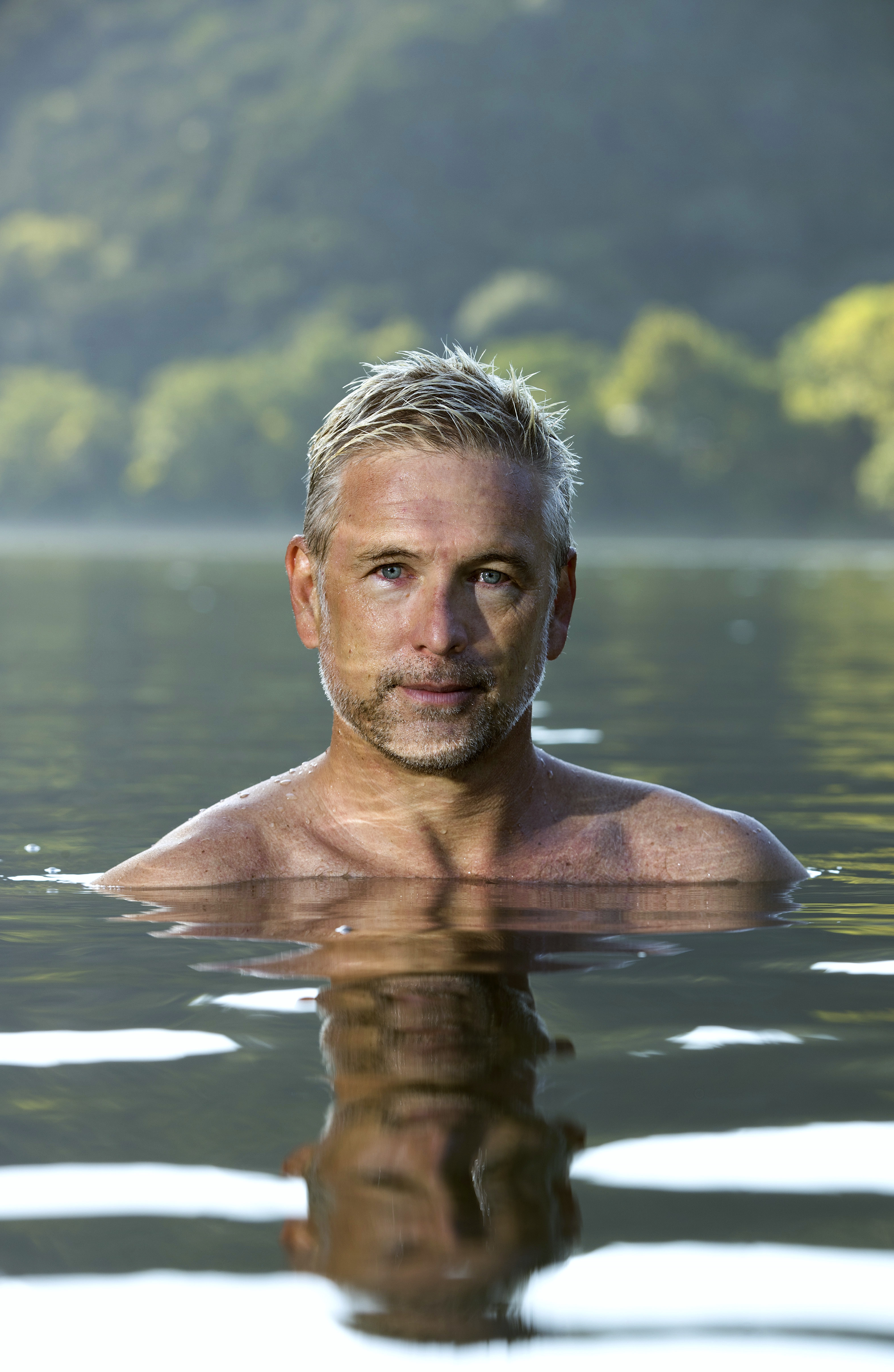
AUSTIN, TX – AUGUST 22, 2017 – Wallace J. Nichols, author of “Blue Mind,” during a paddle board yoga class at Lake Austin Spa. (Erich Schlegel/Special Contributor)


Blue Mind:

1. What inspired you to write Blue Mind?

I wanted to read Blue Mind, not write it. I went searching for a book that connected two areas of personal and professional interest: water, lakes, rivers and oceans AND the human brain, neuropsychology and mental well-being. But I couldn’t find the book or information I was searching for. So, I tried to convince some colleagues that they should write the book and offered to work on it and hand over my research folders. That didn’t work. The last resort was to write the book I was looking for. It took four years and instantly became a New York Times Bestseller, which means a few other people were looking for it too!

2. What was your biggest takeaway from writing Blue Mind and diving deeper into the cognitive and emotional benefits from the ocean and/or water?

I think the big insight is that the way we’ve described the value of healthy waterways and oceans to humans in our efforts to protect and restore them has been dangerously incomplete. People for all recorded human history have described the emotional connection to water. More recently, modern science gives us the tools to describe that relationship in very cool, useful detail. Now it’s time to connect the dots, change the conversation for good and get more work don’t on behalf of our blue planet.

3. What key message about Blue Mind would you like to share with others?

The message is simple: get in the water. Fall in love with your water. Pay attention to all the ways that water makes your life better. Think about it and talk about. Make art and films about it. Then fight for what you love.

4. How has the journey of writing Blue Mind and sharing the novel with the world impacted your life? 

I need daily reminders to get near, in, on and under water. Writing Blue Mind has connected me with so many great people who have such amazing water-related skills. It also made it more clear how important it is to pass the love of water along to my daughters, the way my parents did for me. My relationship with water has been the best part of my life after my friends and family. I want everyone to have the opportunity to say that.

5. Is there a message you would like to share about conservation of the ocean or a quote? 

Our oceans and waterways hold vast economic, ecological and education value. But they are also a source of incredible emotional benefits that humans need more than ever in our high-tech, over-stimulated, hyper-connected stressed-out world. And water can boost our creativity to solve the biggest hairiest problems facing the planet. It’s a beautiful positive feedback loop, really.

Blue Marbles Project:

 1. What inspired the project?

Ocean and environmental communication was in a phase where it was all about bad news, finger-wagging, guilt and fear wrapped in factoids, stats and percentages. Not surprisingly, it wasn’t working to solve problems or grow our blue movement. And frankly, my colleagues and I were feeling burnt out.

I wanted to add a tool to our toolbox that used gratitude, love, recognition, beauty, gift-giving, connection and mindfulness to change the conversation. I came up with idea to pass out recycled glass blue marbles wherever I spoke to people and invite them to pass their marbles on to someone they want to recognize and thank. And then ask that person to do the same. If they felt inclined, they could share the story of their blue marble in whatever way they liked.

The idea had all the ingredients of a viral marketing campaign (no budget, no leaders, few rules, and a very simple, beautiful and sticky message). And that’s what happened. Over a million blue marbles have been shared, reaching tens of millions of people. The stories are beautiful and you’ll find photos of these blue marbles showing up all over the world, near, in, on and under water.

When someone gives you a blue marble and thanks you for doing your part to fix what’s broken here on our planet it’s at the very least a sweet moment, but can also be much more.

100 Days of Blue:

 1. What is the 100 days of Blue Campaign? 

Similar to the thinking around the Blue Marbles Project, we started 100 Days of Blue simply as a way to invite people to reconnect with their water wherever they are each day throughout the summer. For the past four years from Memorial day through Labor Day (the unofficial start and end of summer) people get near, in, on or under water each day and share their stories. It’s a reminder to get your “blue mind” on and take people with you. We build new habits that connect us to our water in positive ways and perhaps pay closer attention to the factors that may limit access…and try to remove them.

2. What is the goal of 100 Days of Blue?

Our goal is to raise awareness that leads to action and ultimately builds movement. That’s always been the flow of my work. It’s not enough to stop with awareness, or even action. It’s about connecting to each other in a way that grows the global blue movement because the challenges we face require a lot more than individual action.

For me personally, the biggest motivator to keep working and fighting has been a deep emotional connection with nature, water in particular. So that;’s the focus: build that connection in order to grow the blue movement. One splash, dive, wave, dip, plunge at a time!

It’s so great to see people emotionally reconnect with their water, overcome obstacles to get back in their water and help each other make it happen. That’s where it all starts. Ask any ocean champion to share their story about their first dive, first wave, first love of water and you’ll learn about what make them tick, drives them forward and makes them unstoppable. We need more unstoppable blue heroes.

3. How can people get involved in the Campaign?

How can people not get involved! Just go outside, find your water and spend time with it. If you’re inspired to do so, share the story. use the #bluemind hashtag so people can find you. If you want to share some blue marbles or read Blue Mind, get in touch.

Stay Connected 

Website: http://www.bluemind.life