Latest Posts

Shark Conservation Cayman in a Nutshell

Who are we?

Shark Conservation Cayman is a collaboration between the Department of Environment and Marine Conservation International, supported by the White Tip Conservation Fund from the Cayman Islands Brewery.  Together with a network of volunteers, the team is working towards a better understanding of our local shark populations. Shark Conservation Cayman and fellow collaborators work in Cayman to study and monitor our local sharks and improve conservation management in the Cayman Islands.

So how do we do that?

In order to protect sharks we need to study and understand their behaviour and life characteristics and use what we’ve learnt to raise awareness in local communities around the importance of sharks to healthy reefs and our Cayman marine environment.

Since sharks are highly mobile animals with the whole ocean to roam in, studying them is no easy feat. In Cayman we use multiple, complementary methods one of which is “Acoustic Telemetry”. This means we tag a shark with an acoustic tag. Then, by utilizing a network of receivers located around the three Islands, we pick up the signals emitted by the tags and monitor the sharks’ movements. The acoustically tagged sharks also get a bright orange tag on their dorsal fin, so they are easily recognized as a tagged shark.

We also study the behavior and abundance of coastal sharks using baited remote underwater video (BRUV) and diving surveys. Lastly we keep an extensive database of shark sightings made by public volunteer reporters. Yesterday’s article also introduced you to our Sharkloggers, ordinary diving enthusiasts who play a vital role in shark conservation in Cayman, and all while having a blast underwater.

What’s next for sharks in Cayman?

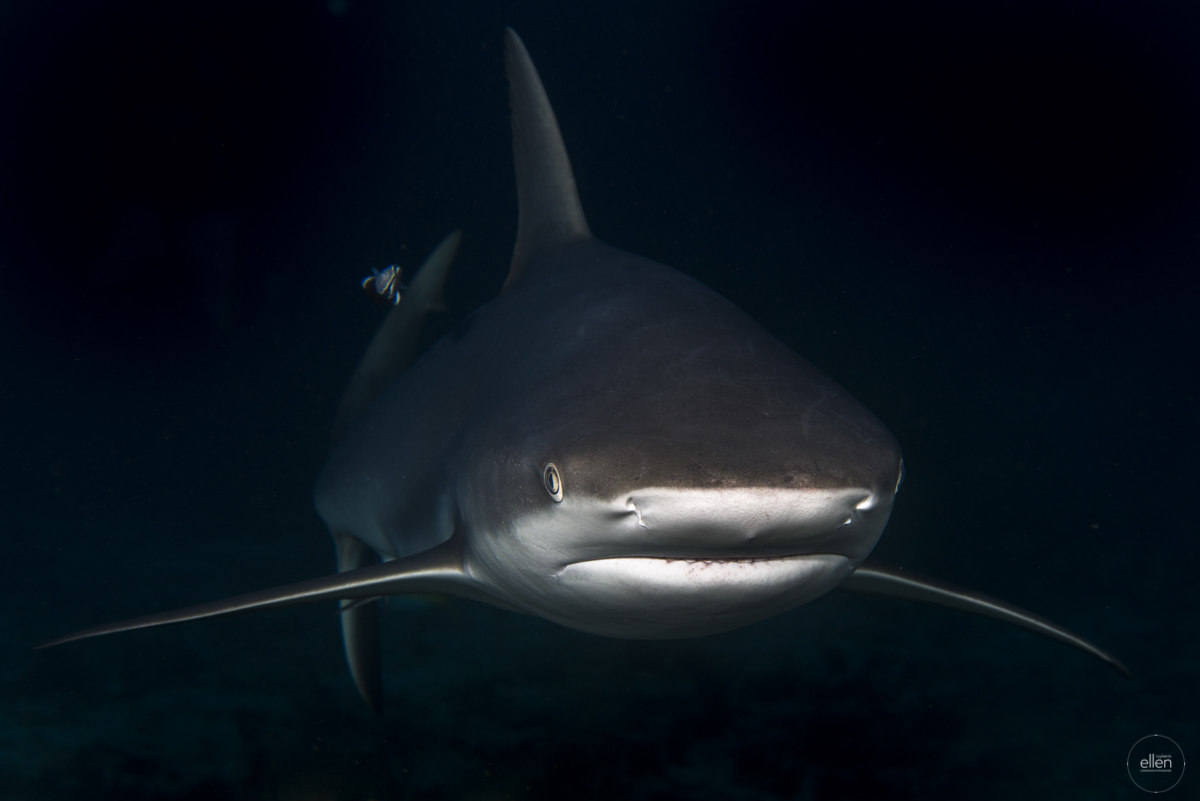
Although worldwide shark research has grown, there is still much we do not know about these animals. Despite their abundance in certain areas, the Caribbean Reef Shark (Carcharhinus perezi) is one of the least-studied large requiem sharks generally. Shark Conservation Cayman places a lot of focus on this species and hopes to enhance study methodologies locally. We would like to know more about where the sharks are going and what they are doing when they are not within our receiver array to help us answer questions like: 

Where do they mate? 

Where do they pup? 

And are we doing enough to protect the areas where juvenile sharks proliferate?

Our goal is to raise enough money to start fitting Caribbean Reef sharks with: 

  • GPS tags (which allow us to track a shark travelling over a wide geographic area and long period of time);
  • Daily Diary tags (which provide detailed information on the movement and behavior of sharks in a short period of time);
  • and to buy an ultrasound machine to be able to assess whether female reef sharks that we tag are pregnant. 

We need your help

As with anything the equipment is pricey so raising funds is our biggest challenge, you can help us by supporting the various fun future initiatives we will be rolling out, making direct donations on our website or volunteering your skills to help our fund-raising team. 

Spreading the word also goes a long way. Tell your friends and family, like and share our social media content and if you ever see a shark whether diving or not, please report it on our website or if you have questions get in touch, we would love to hear from you!

https://www.sharkconservationcayman.com/

Photo Credits: Johanna Kohler, Nathan McCoy, and Tim Codling

Article Written by Guest Writer: Marique Cloete

Meet Our Local Sharks & The People Protecting Them

The Caribbean is famous for being a paradise, rich in colour, biodiverse coral reefs and an abundance of marine life including sharks.  A healthy population of sharks is an indicator of a healthy reef ecosystem and is valuable not only for our marine environment but also for the tourism industry and our economy.  The Cayman Islands is one of the most popular diving destinations in the world and people travel from all over to experience our world renowned underwater world but also for the opportunity to see a shark(s) on their dive.  A survey in 2011 showed that sharks are worth more alive than dead in Cayman. The economic value of an alive shark was estimated to be about US$54 million per year.  So not only do sharks help keep the balance in the marine environment but also add to our islands economy.  The survey also showed that even if tourists don’t want to see sharks while swimming, they do want to know that there is a healthy shark population in Cayman as it is more and more common public knowledge that sharks are threatened but needed for our oceans.  Globally as well as in Cayman, Marine Protected Areas (MPAs) have proven successful in preserving biodiversity as well as allowing fragile ecosystems an opportunity to recover and declining populations of marine life, including sharks, a chance to replenish. For highly mobile animals such as sharks which have also life characteristics such has slow growth, late maturity and relative few pups, MPAs together with specific shark protection measures have proven to be most effective in order to conserve local populations. Therefore, our island rightly takes great pride in our marine environment, our coral reefs are one of our island’s greatest assets, but we can be equally proud to be a shark sanctuary.  The 100% protection of all shark and ray species within our coastal and offshore waters, under the National Conservation Law, provides the foundation for a healthy shark population in the future.  

Meet The Locals

In the Cayman Islands, 8 species of sharks are commonly found including: Great hammerhead shark, nurse shark, lemon shark, Caribbean reef shark, blacktip shark, tiger shark, Oceanic whitetip and silky shark.  According to Shark Conservation Cayman’s, Sharklogger data, the most commonly encountered shark species by divers are: Caribbean reef shark, Hammerhead shark and nurse shark. Lemon shark, blacktip shark and tiger shark are less frequently seen which is a trend which is also shown by data from Shark Conservation Cayman’s ongoing BRUV surveys.  With such a caring local dive community it is not surprising that some of our island’s resident sharks got names and are welcomed dive buddies.

Scarlett: is a friendly Caribbean Reef Shark. She is an old local resident of East End. She is easily spotted by her dark birth mark on the corner of her mouth, giving her the nickname “Smudge”. Scarlett is known to have a calm nature, making her easy to photograph. She usually comes to say HI when a group of divers enters her home range.

Finn: is a friendly resident nurse shark and is a well-known individual among local divers.  SHE (not he) has a distinctive scar on its mouth probably from a hook encounter years ago. Finn can be found on the West Side of Grand Cayman.  She is known to come very close to divers and sometimes stays to swim along to show divers around. 

The Bash Brothers: are two male sharks found in East End of Grand Cayman, while diving in their home range there is a good chance of seeing them. They are often found swimming together.  One of the Bash Brothers has a distinctive scar on its gills. Sometimes a smaller shark “Little Basher” joins the gang but it’s less common to see it.

The Legend 107: this dominant female Caribbean reef shark is a legend Little Cayman.  The origin of her name comes from her dorsal fin tag number “DOE #107” tagged by Shark Conservation Cayman in 2010.  She is the survivor of a hook that was lodged in her stomach and over the years she has grown to 2.2m.

Big Bertha: is a Caribbean Reef Shark.  She got her name as local divers have watched her throughout her pregnancy.  For over a year, Big Bertha became recognizable by her large growing belly.  Big Bertha gave birth last year.  

Little “Hookie”: a friendly nurse shark on Grand Cayman.  His name as it suggests, is due to a very large fishing hook which was found stuck in his upper jaw for over a year.  He is known to have a very lovely personality and comes close to divers to say “hello” sometimes spending the entire dive cruising around with divers.  Thankfully, at the beginning of June 2018 he got relief from his hook as a dive staff successfully removed it.  Now, he cruises around happily without his once recognizable lip piercing. 

Saving Local Sharks

Shark Researchers have a unique opportunity to work with sharks and gather data to gain a better understanding of sharks.  Sharks come across as one of the most intimidating and feared animals on the planet yet are one of the most misunderstood.  Shark Conservation Cayman is working towards a better understanding of our local shark population since 2008. The shark team works with local communities such as fishermen, divers and children as well as schools to educate and communicate. Their work together with the efforts of caring members from the public, led to the shark protection measures in the National Conservation Law in 2015. Shark Conservation Cayman’s research consists of various methods, including the Sharklogger Network, to study and monitor the local shark population.  Shark Conservation Cayman has also successfully collaborated with the Guy Harvey Ocean Foundation (GHOF) on a project that deployed satellite tags on Oceanic white tip sharks and tiger sharks.  Research, conservation and outreach done by Shark Conservation Cayman is made possible due to generous donations via the White Tip Conservation Fund from their main supporter the Cayman Islands Brewery, as well as the member of the public and corporations.  Read more details and on their plans for the future in tomorrow’s (Friday) article.

A Career In Shark Conservation

Notes: Johanna Kohler, Dept. of Environment, during the download of the acoustic receiver array on all Cayman islands. Photo Credit: Johanna Kohler

Meet Johanna Kohler, a local shark researcher and conservationist.  Johanna’s work with her team at Shark Conservation Cayman has been instrumental in helping protect sharks of the Cayman Islands, as well as allowing us to have a greater understanding of our local sharks.   

Q&A with Johanna Kohler

1. How long have you been working in shark conservation?
Since 2010, I’ve worked as a volunteer before and during my studies to help various organizations with their shark conservation efforts. In Cayman, I’m working in shark research and conservation with the Cayman Islands Department of Environment (DoE) and Marine Conservation International, under the name Shark Conservation Cayman, since 2.5 years.

2. What do you love most about shark research?
I love the work on and in the water. Getting to know the shark’s individual character and seeing them in their natural environment. I love finding out how sharks work, what they are up to, how and why they migrate on the big and small scale and how it all fits together to a bigger picture. Sometimes you look at one thing and are able to connect it with another and suddenly you get an “Aha – moment” and are able to explain one aspect of your research questions. Ultimately, I love that with research we are able to understand our shark populations better and better which leads to effective conservation management. In my opinion research is key to a healthy ocean and happy co-existing of all creatures.

3. What are Shark Conservation Cayman’s key methods to protect sharks in the Cayman Islands?
Our research methods include Baited remote underwater video (BRUV) surveys, acoustic telemetry (acoustic tags), public shark sightings and the Sharklogger Network. We also collaborate with the GHOF to satellite tag oceanic white tip and tiger sharks. These various research methods complement each other leading to answer our research questions. We also work with our local communities, such as divers, fishermen, schools and children to educate, share research findings and keep continued open communication. Our work together with the efforts of caring members from the public, led to the 100% protection of sharks and rays within Cayman coastal and offshore waters. The DoE has a conservation unit who enforce our National Conservation Laws in the Cayman Islands, including the protection of sharks.

4. What is biggest struggle in shark conservation?
Human perception of sharks may be the biggest hurdle to overcome. Many years the media and blockbuster movies have mis-portraited sharks as mindless, man-eating monsters. Everyone who has seen a shark in real life knows that this is not true. Sharks don’t deserve this bad reputation but we need to start appreciating the benefits sharks bring to our communities and to the overall marine ecosystem. However, to change the public attitude towards sharks is challenging and needs constant education and communication. In general, a community that perceives sharks as something negative or as nuisance brings various negative consequences for shark conservation such as limited funding, continued fishing globally, accidental catch being killed rather than released and continued fear and myths kept alive.
In Cayman we have been working continuously towards educating our community to help everyone understand that we need sharks in a healthy marine environment for our island and that they do bring socio-economic benefits as well.

5. What is one of the most interesting things you have learned about sharks?
Personally I’m fascinated by behaviour and reproduction. In terms of behaviour not every shark is the same. Every species and every individual within that species has a unique character and behaves differently, like in dogs. Some are curious and come close, others are shy or ignore you and are hardly seen.
When it comes to reproduction, I think it’s pretty cool that different shark species have different ways of reproduction. Some shark pups have even belly buttons! Also, females can store sperm for a long period of time if conditions aren’t right to become pregnant when she mates. She can choose to become pregnant when it suits her. And in some species females are able to clone themselves! That’s a pretty cool super power.

6. Is there a particular species of shark that you most enjoy researching?
To be honest, not really. My favorite shark species are tiger sharks, but all sharks are interesting. Each species is unique and interesting things are yet to be discovered. In Cayman, I love that we are able to dive and see the sharks live in their natural environment as well which is not possible everywhere.

7. What advice would you give to students interested in facilitating real change in shark conservation?
Become a marine biologist, have a passion for sharks and work hard. It’s also important to keep in mind that research needs to go hand in hand with outreach and conservation management in order to effectively work towards shark conservation.

8. How can our local community help contribute to protecting sharks in the Cayman Islands?
There are various ways how everyone on island can help with our research and conservation efforts. If you see a shark, anywhere, during a dive, while on the beach, while fishing, or on the boat, please call it in to the DoE (949-8469) or report it via our website (https://www.sharkconservationcayman.com/report-a-shark/) or Facebook page (Shark Conservation Cayman). Especially fishermen on island are very helpful by telling us when they accidentally caught a shark. They get a really good look at it and are able to give us a lot of great information. The local diving community is also amazing. Local divers, diving centers and dive staff have joined the Sharklogger Network. By participating they help to keep track of our shark populations all year around. Any diver, snorkeler or diving center is welcome to join. Email sharkloggers@gmail.com for more information.
Everyone on island can contribute to protect sharks by not buying or eating any shark meat or shark products (e.g. liver, oil, fins). Also, you can help by raising awareness. Tell your friends and family about the shark protection measures as well as the ecological and socio-economic benefits of having sharks in our ocean.
Lastly, if you are of drinking age, drink more White Tip! The White Tip Conservation Fund from Caybrew is our main support, hence the more you buy the money for our sharks!

9. Why is shark conservation in Cayman so important?

In the Caribbean and worldwide, sharks are indirectly and directly of socio-economic importance. Not only are sharks, as keystone predators, vital in keeping the marine ecosystem healthy and balanced but can also generate direct revenue though tourism. In Cayman our surveys have shown that most tourists come for our pristine waters and vibrant marine ecosystem. Most divers love to see sharks when diving and even tourists that don’t want to see a shark while diving or swimming appreciate knowing that sharks are present because it is a publicly well known fact that sharks are important to our oceans. In Cayman sharks are worth more alive than dead with an estimated yearly economic value of US$ 54 million per year.
Indirectly sharks have further socio-economic benefits. By helping to keep the marine ecosystem in balance, sharks benefit local fisheries and communities.
Therefore, local shark protection measures benefit the Cayman Islands in many ways and has positive effects for local communities as well as tourism.

Article Written by: Laura Butz and Johanna Kohler

Photo Credit: Johanna Kohler

Tipping Point

My brief take on the global impact of the human-shark relationship.

written by Marique Cloete

“Your life is inextricably linked to that of a shark whether you choose to accept it as your truth or not.”

I recently got a puppy. You may ask what this has to do with Sharks. Not much unless you count the fact that he will soon be donning a shark fin life-vest when we patrol the ocean. A recent incident with puppy however got me onto the subject of my article. The two of us were hunting for coconuts in my garden and at one point I hooked a coconut and pulled it down. I shouted “move!” but Puppy being a puppy and not yet fluent in the English language did not artfully step aside as I expected and nearly got in the way of a crashing coconut.

“More humans are killed each year by falling coconuts than by Sharks.”

Sound familiar? This little urban legend gained momentum after a publication by a shark expert in 2002 cited “human death by coconut” being at over 150 annually and way higher than recorded fatalities from shark bites over the same period. While this makes for entertaining google fodder it does appear to be lacking in hard scientific evidence.

A source I deem a tad more accurate is the data published by the International Shark Attack File (“ISAF”), an organization which investigates incidents involving shark-human interaction. In 2017, 155 cases of both provoked and unprovoked shark attacks on humans were investigated globally of which only 5 were fatal. (a whopping 53 of the 155 cases recorded occurred in US waters, surprisingly no mention yet of a giant wall to keep sharks out.)

Why am I focusing on shark attack statistics in an article aimed at conservation? Well, because in my opinion, negative public perception is the greatest challenge that sharks and shark conservationists need to overcome if we have a hope of saving the species. Whether sharks are being killed by willful persecution, ambivalent economic prosperity or just plain ignorance, the fact remains that, globally sharks are being wiped out at rates that (should be) alarming to any person with even a basic understanding of ecology.

Sharks have been on this Earth for over 450 million years. They have survived each of the five preceding major mass extinctions but may not survive the sixth which incidentally we are facing as you are reading this article.

Five human deaths from sharks.

If google is to be believed it is estimated that humans kill about 100 million sharks annually. If you factor in population decline due to habitat loss or ecosystem degradation, the number of human induced shark deaths rises dramatically.

The most recent shark fatality in the Reunion Isles (which at 2 human deaths accounted for the highest concentration of fatalities in 2017 per the ISAF list) lead to 11 time world surf league champion Kelly Slater calling for a daily cull on sharks, a statement which he instantly retracted due to public outcry. Per an article in “Surf Europe” however his validation had already ignited embers smoldering under the surface within the community and the next day saw a fire bomb attack on the offices of the marine reserve and a spate of death threats against conservationists in the area. Shark hunting and certain other commercial fisheries have been closed on the island since the opening of the marine reserve. The tragedy provided the weapon. The motive was always there.

The existence of marine reserves and anti-shark fishing laws in place on islands such as Reunion (and Cayman) shows how far we have come and the leaps and bounds made by global organizations such as CITES and Wildaid in altering public perception needs to be acknowledged.

Per a Wildaid survey done in 2016 on Chinese residents, shark fin consumption had declined by 80% since the first survey done. 93% of participants had not eaten shark in last 6 years and 80% attributed it to the messages spread by the Wildaid anti-finning campaign.

I have no insight into the sampling method used to be able to say whether or not the results from that survey could be projected to the population as a whole. Whilst I would be surprised if that study was representative, the fact that such results can be obtained in Asian markets is still in my opinion a huge win for conservation as is every new species added to the CITES “Protected species” list.

A species can be listed as threatened per the IUCN Red List but that doesn’t automatically result in protected status. In order to achieve “Protected” status a lot of information is needed about a species and it needs to be demonstrated that it is in our best interest to protect.

And this is why research done by shark biologists is so vital.

50 % of shark and ray species are currently threatened or near threatened with extinction. 70 + species of sharks and rays are threatened with extinction. (IUCN)

The science is not merely a means to stave the scientist’s curiosity. It serves a grander purpose.

I titled this article tipping point because I believe we are constantly at a tipping point as it pertains to the health of our oceans and planet and whether we can bring the populations of threatened shark (and other) species back from the brink of extinction remains to be seen.

However if you are of the view that we are too late, I implore you to think differently. There is always something worth saving. But it will not be possible if the masses turn a blind eye.

So if you are still reading at this point I thank you, and please check back here on Friday for my article about Shark Conservation Cayman and see how you can get involved.

Further if you have not already I would strongly recommend watching “Sharkwater”  and “Racing Extinction” two very powerful films. For those residing in Cayman, we are screening “Sharkwater” tomorrow night at the seaside cinema. See our Facebook page for more details.

Happy shark week!

Photo Credit: Marique Cloete


This feature was by guest writer: Marique Cloete – Shark Conservation Cayman

About Marique Cloete

OLYMPUS DIGITAL CAMERA

Things I love: The Ocean, Diving, Climbing, Conservation, Food, Travel, Writing & Photography.

Things I don’t love: Apathy & Ignorance

Moved to Cayman Islands from South Africa in 2016 and am in love with this little rock and all the animals that live here (including the Bipeds)

Weird and Wonderful Sharks

Sharks have been roaming the oceans for over 400 million years and there are about 500 different species that we know of.  They are a majestic and fascinating creature.  As apex predators, sharks play a key role in maintaining the health and the balance of the ocean.  Sharks control populations of various marine species that fall below them on the food web, keeping populations at a healthy size and removing weak and sick individuals. All of which supports a healthy marine ecosystem and biodiversity.  Focusses research continues to allow us to learn more about the characteristics and behaviour of various shark species to give us a better understanding of their important role in the marine environment. Sharks are present in all oceans, and a few species including the Bull shark are able to survive in fresh water. Unlike boney fish, the skeleton of sharks is made up from cartilage.  Sharks control their buoyancy by constant swimming. The perfectly shaped fins and tail provide lift, while the oily liver also helps with buoyancy. Most sharks, like many other marine fish, are coldblooded, but some are warm blooded which allows them to grow and swim faster, for example the Great White shark can swim up to 37 mi/h (60 km/h). Although, there is still so much we have yet to learn about the various species of sharks, one thing is clear: sharks are pretty cool animals!

Top 11 Cool, Weird and Interesting Facts About Sharks

1. Whale sharks are the largest species of shark, growing up to 40 ft (12 m) long.  Additionally, they are also the world’s largest fish and feed on plankton.

2. Greenland sharks are rarely seen in the wild and is one of the slowest moving fish ever recorded. 

3. Unlike marine mammals or some other marine species which use echolocation to detect prey, sharks use electrical pulses.

4. Hammerhead sharks are super cool looking.  Moreover, these sharks have a 360-degree field of vision. Newest research has shown that Great Hammerhead sharks spend a up to 90 percent of their time swimming on their side, at angles of between 50 and 70 degrees to be more streamlined, reduce drag and save energy. 

5. Female sharks have much thicker skin and are usually larger in size than males of the same age. The thicker skin protects females during mating when males bite females to hold on.

6. The megamouth shark is one of the rarest sharks. Less than 100 specimens have ever been seen. This shark is a filter feeder, eating plankton, and can grow up to 15 ft (4.6 m) long. 

7. The teeth of sharks are covered in fluoride, which make the teeth cavity-resistant. The chemical fluoroapatite, makes the teeth resistant to acid produced by bacteria. On top of that, sharks are replacing their teeth throughout their lives, which means they have excellent dental health.

8. Some sharks glow in the dark. Lantern sharks are able to make their own light through bioluminescence. In the deep sea, velvet belly lantern sharks emit light on spines to warn predators.

9. Females in some shark species, can clone themselves, which is known as parthenogenesis. This means, a female reproduces without the aid of a male shark. 

10. The thresher shark hunts with its tail! The tail of thresher sharks can grow to half of their body length and is used as a weapon. Thresher sharks stun their prey by cracking their tail like a whip.

11. Female sharks may be pregnant for a long time. Depending on the species, the gestation period for a pregnant female shark ranges from 5 months to 2 years. The spiny dogfish shark has a gestation period of 2 years, the longest confirmed pregnancy for sharks (and also any animal).

Article Written by: Laura Butz and Johanna Kohler

Photo Credits: Ellen Cuylaerts

Shark Tales: 5 Common Shark Myths Debunked

We have all heard our fair share of “Shark Tales”.  These tales have certainly added to the allure, mystery and intrigue around sharks.  The many misconceptions of sharks have led to a myriad of rumours and myths about them some of which keep feeding into the public fear.  Over time, thanks to shark research, many popular shark myths have been debunked.  More and more organizations and media are beginning to share actual shark facts which, rather than add to the mystery, make it clear that sharks deserve our respect and not fear. Below we are sharing 5 popular common myths about sharks debunked.  

5 Popular Shark Myths Debunked

1. Will a shark drown if it stops swimming? This popular myth does not apply to all species of sharks. Sharks will sink to the sea floor if they stop moving but, depending on the species, they may not drown. That being said, most species of sharks would in fact drown if they were to stop moving.  The constant forward movement together with a slightly opened mouth provides water flow over the gills which is required for fish to breathe. So most shark species including the Great White, Mako, and Tiger shark need to swim in order to breathe. However there are some sharks that are able to stop moving and still breathe. In Cayman, the nurse and Caribbean reef sharks are able to rest on the sea floor and actively pump water over their gills.  This way the constant water flow over the gills is still given even when resting. 

2. Are sharks man-eaters and deliberately attack humans? Contrary to common public belief, sharks are not out to get human beings.  Humans are unpalatable to sharks and not on the menu of prey.  Shark incidents do happen, however this is due to mistaken identity.  Between 2001 – 2013, 11 people were fatally bitten by sharks, compared to  364 people that died from a dog bite in the same period.  Even the chances of getting struck by lightning are much higher than a shark incident. Nevertheless, sharks are wild animals and should always be approached with respect but there is no need to fear them. Most of the time, sharks and humans co-exist without any incidents.

3. Are sharks attracted to the smell of blood and urine?  This is also a very common myth.  Sharks are said to be able to detect a drop of blood in the amount of water that is equivalent to an Olympic-sized swimming pool. We can all agree that, yes, sharks have a very good sense of smell.  However, the scent a shark is really attracted to are the amino acids and oils from the blood and guts of marine animals that are on their list of prey. So no, if you pee into the ocean it won’t attract sharks.  Are sharks attracted to human blood? No.  This also means that women can happily swim in the ocean while on their period.  Even if you have a small cut with a few drops of blood in the water, it is unlikely to attract a shark.

4. Do sharks stalk people? Thanks to the opening scene in Jaws, one can see how this myth came about. No, sharks do not stalk people and aren’t lurking in the waters waiting to prey on humans.  Sharks by nature may be curious and investigative of people swimming by.  Some sharks love to stop by divers to check them out but most are rather shy and swim away as soon as they see humans. If a shark does happen to swim passed you, there is a good chance that it will lose interest in you or simply ignore you on its way to something more exciting.  And, no, sharks are not on a mission to hunt and kill people.  Human beings are not on their list of prey.  

5. Do sharks eat all the fish and compete with fishermen? No, they don’t! In contrary, a healthy ocean and reef ecosystem needs sharks in order to maintain a balance.  Sharks not only keep other fish populations at a healthy size but also eat the sick and weak.  This way the ecosystem remains in balance which ensures a stable and healthy fishery.  Healthy fish stocks are important not only for commercial and recreational fisheries, but also for sports fishing and tourism.  So no, sharks don’t eat all the fish on the reef but they do help keep the ecosystem healthy for everyone to enjoy.

Article Written by: Laura Butz and Johanna Kohler

Photo Credits: Ellen Cuylaerts

Why Shark Week?


Eco Chic Cayman is proud to team up with Shark Conservation Cayman for our second annual “Shark Week.” Last year our collaboration aimed to accompany Discovery Channel’s “Shark Week” with real information that is relevant to Cayman and our community. We shared interesting facts about our local sharks and conservation efforts and Cayman loved it. That being said, we are excited to share all new content to celebrate “Shark Week” in Cayman this year. Shark Conservation Cayman’s mission is “To better understand Cayman’s shark populations and to raise awareness of the importance of sharks to healthy reefs and the marine environment”. The research and conservation efforts are supported by the White Tip Conservation Fund from the Cayman Islands Brewery. Read more about the collaboration, between the Cayman Islands Department of Environment and Marine Conservation International, and their work on their brand new website.

Each day of the following week, July 22-28, we will feature a new collaborative blog post sharing interesting shark facts, debunked myths about sharks, the latest in local shark conservation initiatives and a behind the scenes look into the daily life of a shark researcher and conservationist.  Stay tuned!…. 

For The Love Of Sharks

Why “Shark Week”? Because sharks are simply amazing and fascinating creatures! Sharks get a bad reputation through sensational press and movies which they simply don’t deserve. In contrary, sharks provide so many benefits to communities and the ecosystem, we should rather appreciate and respect them. 

Sharks are simply sharks! Sharks play a vital role in our marine environment and provide benefits not only towards healthy reefs but also for local communities and businesses as well as tourism. Unfortunately, sharks are often portrayed as something negative. The misleading representation results in fear, myths and dubiety in the public. However, sharks should be respected not feared! The only scary thing about sharks is the fact that globally we are losing them at an unprecedented rate. Humans are the shark’s biggest threat; diminishing populations by overfishing, by-catch kill, shark finning, pollution, and habitat destruction. The loss of sharks, which play a vital role in helping to keep reefs and reef fish population healthy, is of great concern. Worldwide, the drastic decline in shark populations has negative impacts on ecosystems and people. Now more than ever, shark conservation is critical to help conserve and replenish shark populations worldwide. Marine Protected Areas and designated Shark Sanctuaries offer hope for sharks, offering sharks a safe haven within those protected waters and a chance for populations to recover. Cayman can be proud to be a leading example in shark conservation globally. Collectively, we intend to educate our local community about the incredible attributes of these majestically fascinating creatures. Together we can help others see sharks from a different perspective, a perspective which allows for open communication and respect.

Therefore, for the next week we are excited to share our “shark geeky” side. Join us in the celebration of one of the most misunderstood creatures on earth.

Working to Protect Sharks

Underwater during a survey dive in Little Cayman.

Check out the interview with Steff McDermott, a young Caymanian student who volunteers with Shark Conservation Cayman. She loves our stunning marine environment and is dedicated to help with local shark research and conservation efforts. Read more from a student’s perspective what it means to care about our ocean’s future and to work with Shark Conservation Cayman. 

What do you love most about sharks? 

What I love the most about sharks are the multiple superpower abilities they have such as super speed, super senses and their silk beauty.

What inspired you to pursue a career in marine biology?


As a child I wanted to become a marine biologist it is my childhood dream and thanks to Shark Conservation Cayman I realized that I am capable of making my dream come true. I was never really inspired I just grew up in the ocean, and I want to continue living and working with the ocean and marine biology grants that.


 What do you enjoy most about working in shark conservation?

What I love the most about working in shark conservation are the dives with shark encounters, and watching them on the BRUVs. The feeling of a shark swimming around you is adrenaline pumping fun as I am in their territory and they are curious about me as I am about them. After spending hours of watching them, I grew to respect sharks, and I fell in love with their biology and abilities. 


What is the biggest takeaway you would like people to know about sharks and shark conservation? 

The biggest takeaway I want people to know is that sharks are friends, not enemies. We should show sharks respect instead of fear as these creatures are truly spectacular and vital for our seas.

What is the biggest struggle you find with shark conservation? 

The biggest struggle for me in shark conservation is understanding and changing the mindset of fishermen and other people who kill sharks.

What has your overall experience been like working with sharks? 

My overall experience working with sharks has been amazing! I can say that I love sharks. But I love the people who I work with even more *cough* Johanna *cough*. Johanna has been very supportive, and I cannot thank her enough for the time and patience she has put in me. Her fearless and passionate attitude towards sharks rubbed off on me, and so did her work ethic, that chick is amazing!

What species of shark is your favorite?

My favorite species of shark will have to be the Great Hammerhead shark and the Longcomb sawfish as they are ancient creatures and their anatomy astounds me! 


Photo Credit: Shark Photos, Ellen Cuylaerts

Photo Credit: “Underwater during a survey dive in Little Cayman.” DOE

Article Written by: Laura Butz and Johanna Kohler